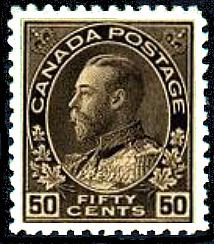
 Light Shade |
 Dark Shade |
The fifty-cents stamp was issued in sheet form only, from a total of 4 plates (see Summary for details), and was used for parcels and other large or heavy items.
The relatively large number of printings for the fifty-cents value is probably due to its use as a means to indicate payment of certain taxes, for which purpose it was overprinted WAR TAX or INLAND REVENUE TAX.
There are a number of shade variations. Although the earliest printing from Plate No. 1 was black, the printing from Plate No. 2 was the deepest black of all. As this plate wore down due to use, the printings turned a a silver grey colour. The later printings are described as black-brown and a lighter brown-black. Because of the difficulty in showing subtle differences in shade in this medium, for simplicity, the following illustration just represents the shades as light and dark.
Light Shade |
Dark Shade |
Retouches and Re-entriesThe one die that was used in the making of the fifty-cents value was retouched for the laying down of the last plate, Plate No. 4. Stamps printed from this plate show a strong vertical line in the upper right spandrel. For a detailed description of the other retouches and the re-entries, readers are advised to consult George Marler's book Canada: The Admiral Issue (see References). |
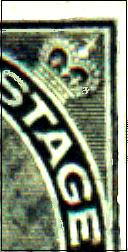 Weak Vertical Line |
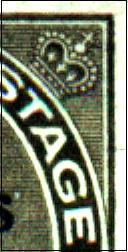 Strong Vertical Line |
Updated: 5 Oct 97