The Admiral Stamps of Canada
Three Cents Brown -Sheets
Date of Issue:6 August 1918
Quantity:2,044,000,000;
Method of Printing: Sheets - Wet and Dry processes
Introduction
The three-cents brown sheets were printed from plates numbered from 1 to 120. (See Summary for details.) There is some controversy concerning plate numbers 115 to 117 due to the dates of their approval, and it is not believed that any printings in brown were made from them.
| Printing. The two main groupings of the three-cents brown are characterized by the method by which they were printed: Wet and Dry. Those printed by the Wet process are significantly narrower than those printed by the Dry as can be seen by the illustration, which shows that the difference can be as much as a half millimetre. |
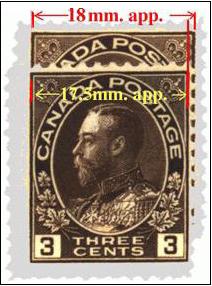
Wet and Dry Printings |
Retouches and Re-entries
Only one die was used in the manufacture of the plates used to print the three-cents brown value, but numerous retouches were made during the lifetime of its issue. In addition, there are several instances of re-entry. Those wishing further information on retouches and re-entires are advised to consult George Marler's book Canada: The Admiral Issue, which is listed in References .
Shades
There are three common shade variations: yellow brown, a normal brown, and dark brown. The time periods associated with each shade is uncertain due to the strong wear on the die and plates used in the manufacture of the three-cents brown, which caused the whiter areas on the stamp to become more prevalent, resulting in a lighter overall appearance. There is a genuine light brown shade, however, but it is very rare, and mint copies are almost non-existant.
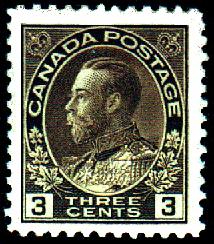
Yellow Brown |
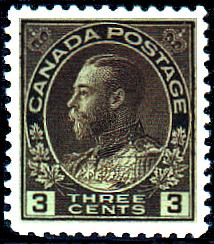
Brown |
Lathework
Type B on Plates 1 to 73, 78 and 80; Type C on Plate 76, 79, 81, 94 and 95; and Type D on Plates 96 to 120. (See Lathework for an explanation of types.)
Updated: 11 Oct 97